Housing adaptation grants in Ireland: who qualifies and how to apply
Three schemes, all run by your local authority, worth up to €40,000. Which one fits you, how income affects the amount, the documents councils ask for, and the order to do things in, checked against council sources.
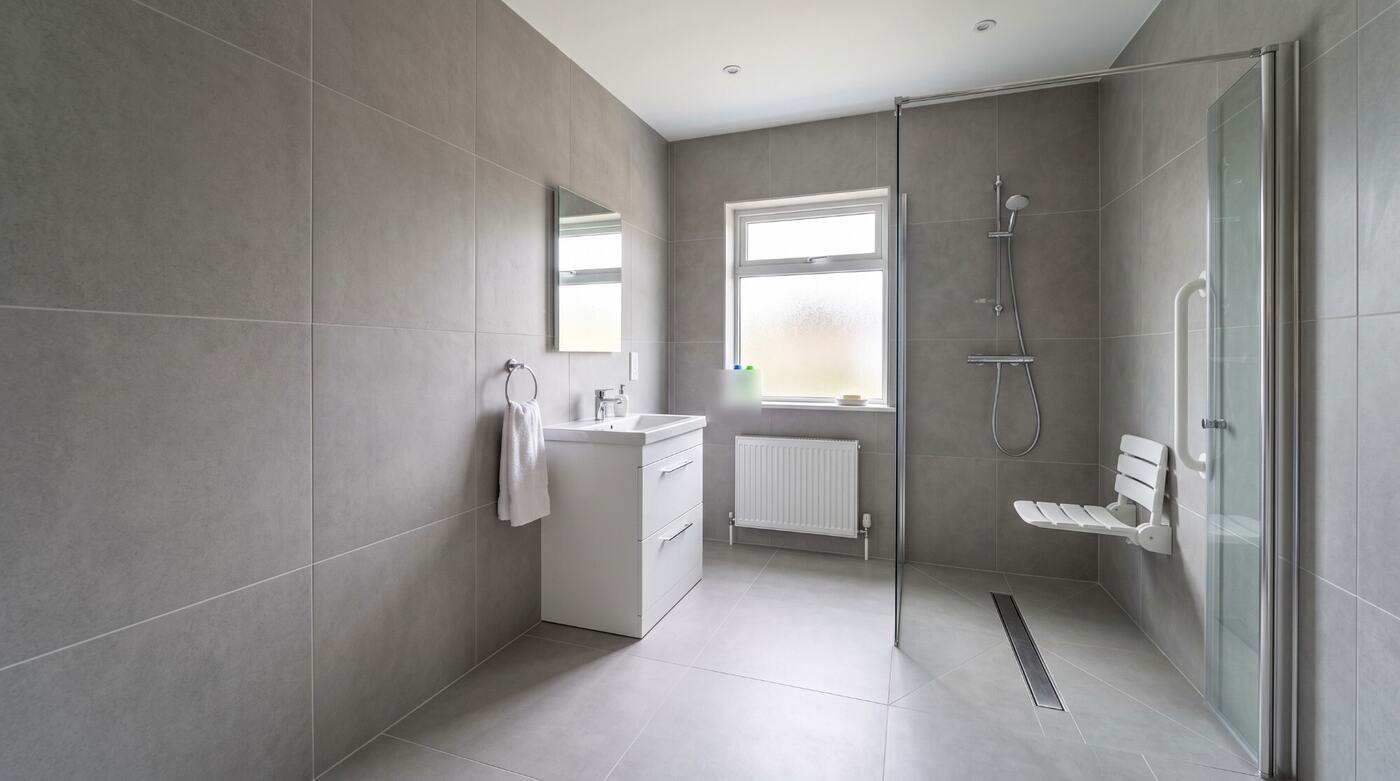
There are three separate grants for making a home easier to live in. Most people only ever hear about one. All three are run by your city or county council, are means tested, and are paid after the work is done. The rates below have applied since 1 December 2024.
Which grant fits you
| Grant | Maximum | For | OT report |
|---|---|---|---|
| Housing Adaptation Grant for People with a Disability | €40,000 | Structural adaptations: wet rooms, downstairs toilets and bedrooms, wider doors, ramps, lifts, extensions | Usually required |
| Mobility Aids Grant | €8,000 | A basic set of mobility works: grab rails, ramps, stairlifts, level-access showers. Household income up to €37,500 | Required for a stairlift or fixed track hoist |
| Housing Aid for Older People | €10,700 | Repairs rather than adaptations: heating, rewiring, roofing, windows and doors, water and sanitary facilities | Usually not required |
Housing Adaptation Grant for People with a Disability: up to €40,000
What it covers. level-access showers, downstairs toilets, widened doorways, ramps, through-floor lifts, extensions.
Who qualifies. Means tested on household income for the previous tax year, after deductions. No grant if that's over €75,000. An occupational therapist report is usually required.
Mobility Aids Grant: up to €8,000
What it covers. grab rails, ramps, stairlifts, level-access showers.
Who qualifies. Household income must be under €37,500. Rose from €6,000 on 1 December 2024. OT report needed for stairlifts and hoists.
Housing Aid for Older People: up to €10,700
What it covers. rewiring, heating, roofing, structural repair.
Who qualifies. Income taper applies. An OT report is usually not required.
Figures as published on gov.ie and council websites, checked November 2026. Thresholds change and councils apply them differently, so always confirm with your local authority.
Income bands: how much of the cost is covered
The Housing Adaptation Grant and Housing Aid for Older People are means tested on household income for the previous tax year, after allowable deductions. Dublin City Council publishes these bands for the Housing Adaptation Grant:
| Household income after deductions | Share of approved cost covered |
|---|---|
| Up to €37,500 | 100% |
| €37,501 to €43,750 | 85% |
| €43,751 to €50,000 | 75% |
| €50,001 to €62,500 | 50% |
| €62,501 to €75,000 | 30% |
| Over €75,000 | No grant |
Deductions can lower the income counted. Since December 2024 they include allowances for children and full-time carers, mortgage or rent, and the cost of care. The Mobility Aids Grant has a single limit: household income up to €37,500. Your council's guidance sets out exactly what it counts.
Who can apply
The grants are for private homes. Homeowners apply to their own council. Some councils, Wicklow for example, say tenants in private rented homes and Approved Housing Body homes can apply too. If you rent privately, the tenancy needs to be registered with the Residential Tenancies Board. Council tenants have a separate adaptation scheme, run by their council.
The occupational therapist report
Most adaptations need a report from an occupational therapist before the council will approve anything, and a grant-funded stairlift or fixed track hoist always does. The report says what the person needs, which is what the council funds and what every contractor should be quoting for.
Public waiting lists for an OT can run for months. You can pay a CORU-registered occupational therapist privately to get it done faster. Dublin City Council, for example, pays up to €300 toward a private assessment if the application succeeds. Ask your council two questions before you do anything else: how long is the OT waiting list, and can I use a private OT?
See private occupational therapists in the directory, or tick “Private occupational therapists” in the request form.
Documents you'll need
Each council sets its own checklist, but these come up again and again. South Dublin County Council's conditions, for example, ask for most of them:
- The completed application form from your council
- Proof of household income for the previous tax year
- Proof that Local Property Tax is paid up to date
- The occupational therapist's report, where one is needed, and the receipt if you paid privately
- Three written, itemised quotes for the work
- The contractor's current tax clearance (or C2), submitted with the quote
- Your own tax clearance, if the grant is €10,000 or more
How to apply, step by step
- Find your council's form. Your county page links to the official page where we've checked it. Apply by county.
- Ask about the OT. How long is the waiting list, and will they accept a private report?
- Get the OT report. It specifies the work, so every quote prices the same job.
- Get three itemised quotes. Written and broken down, from contractors with current tax clearance. Finding contractors who do grant work.
- Send it all in. Form, income proof, Local Property Tax, OT report, quotes and tax clearance.
- Wait for written approval. Nothing starts before it. Work done before approval isn't covered.
- Have the work done, then claim. The grant is paid after the work, up to the approved amount.
VAT and what's not covered
Dublin City Council's pages say the grants don't cover VAT. You may be able to reclaim some of it from Revenue after the work is paid for, so ask your contractor how VAT is shown on the quote. The approved amount is a ceiling: if the final bill is higher, the difference is yours. Portable equipment is generally a matter for the HSE, not the council grant. See bathroom safety aids: what the HSE may provide and what to buy yourself.
Four mistakes that delay or void a claim
1. Never start work before written approval
Work begun before the council approves it is not covered, no matter how obvious the need or how long you've waited. This is the most common reason applications fail.
2. Three itemised quotes, not three estimates
A price over the phone or a one-line total won't do. Each quote must break down the work so the council can compare like with like.
3. Your contractor must be tax compliant
The council will not release payment to a contractor without current tax clearance. Check before you choose, not after the work is done.
4. The grant is paid in arrears
You pay first and claim after. The approved amount is also a ceiling: if the final bill comes in higher, the difference is yours.
Apply by county
Official application pages we've checked for these counties:
Dublin
- Dublin City Council: Housing Adaptation Grant for Disabled People
- Dublin City Council: Mobility Aids Grant
- Dublin City Council: Housing Aid for Older People
- Dún Laoghaire-Rathdown County Council: grant schemes for private homes
- Fingal County Council: housing adaptation grants
- South Dublin County Council: housing grants
- Contractors and OTs covering Dublin
Cork
- Cork County Council: housing adaptation grants
- Cork City Council: grants for private homeowners
- Contractors and OTs covering Cork
Wicklow
- Wicklow County Council: housing grants (forms and standard costs)
- Contractors and OTs covering Wicklow
Donegal
- Donegal County Council: application form for all three grants (PDF)
- Donegal County Council: Housing Adaptation Grant guidelines (PDF)
- Donegal County Council: contractors who do grant work, updated 16 February 2026 (PDF)
- Contractors and OTs covering Donegal
Kerry
For every other county, contact the housing grants section of your city or county council. Each county page lists the contractors and occupational therapists who cover it:
Common questions
What is the maximum housing adaptation grant in Ireland?
€40,000, under the Housing Adaptation Grant for People with a Disability. The amount you get depends on your gross household income and the approved cost of the work.
What does the Mobility Aids Grant cover?
Basic mobility works such as grab rails, ramps, stairlifts and level-access showers, up to €8,000, for households with income under €37,500.
Do I need an OT report for a stairlift?
Yes. Any grant-funded stairlift or hoist needs an occupational therapist's report.
Is the grant paid before or after the work?
After. You pay the contractor and then claim, and the approved amount is a ceiling. If the final bill is higher, you pay the difference.
Can I get a grant for work I've already done?
No. Work started before the council's written approval is not covered.
Sources: gov.ie (revised grants from 1 December 2024), Dublin City Council, South Dublin County Council, Wicklow, Kerry and Donegal County Council grant pages, checked November 2026.
Describe the job once. Hear back from providers in your county.
Tell us where you are with the grant and what needs doing. We pass it only to the types of provider you tick, covering your county.
- Fill in the form. Two minutes.
- We match it. Up to three providers per type you tick.
- They contact you directly. No obligation. Get three itemised quotes for the council.